
February 9, 2024

December 30, 2024

We’re pleased to announce that on January 6-7th of 2025 MicroGenDX will be moving into a new, state-of-the-art facility in Lubbock, Texas. This expansion marks an important milestone in our mission to deliver clinically actionable insights to providers and to advance microbial diagnostics. Our larger, modernized lab features expanded capacity and improved resources, designed to help us scale our operations and improve the quality of our testing processes. With the new facility, we’ve brought our clinical diagnostics team and our life research division (RTL Genomics) together under one roof. This integration will enhance collaboration between our teams, accelerating R&D efforts […]
March 24, 2025
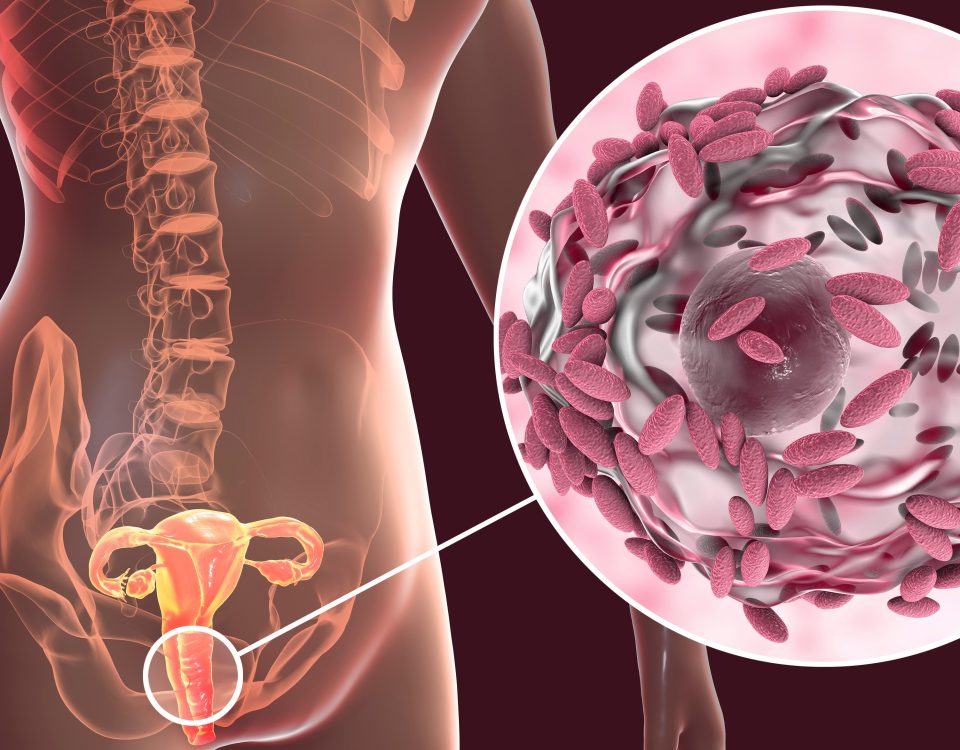
Dysbiosis of the vaginal microbiome a.k.a. bacterial vaginosis (BV) remains one of the most common vaginal infections among reproductive-aged women, affecting one in three women globally. Despite the availability of antimicrobial treatments, recurrence rates of BV exceed 50% within three months, leading to frustration for both women and their providers. Until now, BV treatment has focused solely on women, with limited evidence backing partner treatment. However, a pioneering Australian study, Male Partner Treatment to Prevent Recurrence of Bacterial Vaginosis, published in The New England Journal of Medicine (NEJM, March 2025) provides compelling findings that treating male partners can significantly reduce […]
April 15, 2025
Vienna, Austria – April 11, 2025 – In a major advancement for infection diagnostics in Europe, MicroGen Diagnostics and Labor Dr. Fenner have launched a new rapid microbial DNA sequencing service, enabling clinicians to identify bacteria, fungi, and resistance genes with unprecedented accuracy. Healthcare professionals across Europe can now send patient samples to Labor Dr. Fenner in Hamburg, Germany, and receive comprehensive diagnostic reports within 3-5 days. The laboratory report includes a full microbial profile […]
July 7, 2025
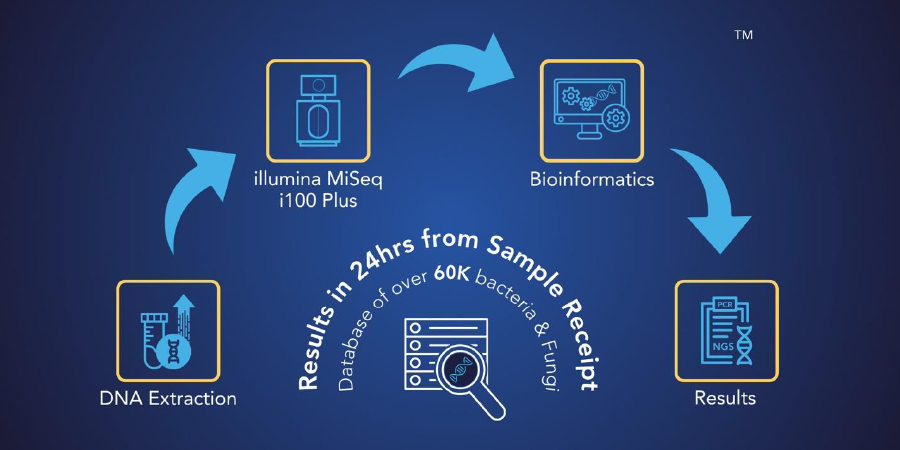
MicroGenDX Adopts Illumina i100 Plus to Deliver Faster, More Reliable NGS Result At-a-Glance: What the i100 Plus Means for Your Practice NGS results in 24 hours after sample receipt, with an 80% faster turnaround, creating faster molecular diagnostics that keep pace with in-house PCR panel processing. 4x greater sequencing depth improves detection of low-abundance/low-frequency microbes for more complete microbial visibility. More data per sequencing read increases reliability of results and confidence in microbial detection. A single, combined report delivers both qPCR and NGS results at once. Quickens timeline for precision clinical decision-making across urology, ENT, OB/GYN, wound care, and other […]
July 17, 2025

In clinical diagnostics, the accuracy and reliability of test results are paramount. As a healthcare provider, the MicroGenDX team understands you expect the diagnostic tools you recommend to your patients to be both precise and trustworthy. The MicroGenDX team takes this responsibility seriously, and our commitment to accuracy is reflected in the rigorous validation and oversight processes of our accreditation and regulatory partners. This blog takes a closer look at the validation and quality monitoring processes required by the College of American Pathologists (CAP) and other regulatory bodies and how MicroGenDX meets these standards to achieve our high accuracy. The […]
September 24, 2025

In neurologic infection cases, time determines patient outcomes. Delays in identifying the cause of infection can lead to extended ICU stays, major complications, or diminished quality of life for patients. Traditional culture methods can take days and sometimes weeks to yield results—time that neither physicians or their patients have. Our integration of the Illumina MiSeq i100 Plus enables delivery of Next-Gen DNA Sequencing (NGS) results as soon as 24 hours after sample receipt. This advancement is providing neurologists and infectious disease specialists with insights when they need them most, reducing diagnostic delays. By minimizing the time lag between testing and […]
December 3, 2025

Periprosthetic joint infections (PJI) remain one of the most serious and costly complications associated with total joint arthroplasty. Although they occur in 1–2% of cases, the consequences are severe—ranging from multiple revision surgeries and prolonged hospital stays to reduced patient mobility and increased mortality risk. Beyond clinical outcomes, the financial burden is substantial, with average cost of $100,000 per episode and lifetime costs reaching roughly $391,000 per patient. A particularly complex clinical challenge arises when PJIs are culture-negative, which occurs in an estimated 15–30% of cases. When standard microbiological cultures fail to identify a culprit pathogen, orthopedic surgeons and infectious […]
December 30, 2025

A Critical Issue Affecting Millions of Women Intrauterine devices represent one of the most effective forms of long-acting reversible contraception available today, with efficacy rates comparable to sterilization methods. Yet despite their clinical advantages, a staggering 57% of IUD patients in the United States choose to have their devices removed before the recommended duration of use. This represents not just a contraceptive failure, but a missed opportunity to provide sustained, reliable reproductive health management to millions of women. For clinicians managing IUD patients, these premature removals translate into valuable clinical time spent addressing complications, counseling disappointed patients, and navigating alternative […]
January 23, 2026

A Structural Shift in Outpatient Orthopedics – and the Role of Diagnostics Beginning January 1, 2026, a fundamental shift will take place in outpatient orthopedic care. The Centers for Medicare & Medicaid Services (CMS) has finalized a rule expanding Ambulatory Surgical Center (ASC) eligibility to include select revision total knee and hip arthroplasty procedures. This decision moves some of the most complex orthopedic cases into outpatient settings for appropriately selected patients. While this policy change expands access and efficiency, it also raises the bar for diagnostic certainty. Revision arthroplasty carries inherently higher clinical risk-particularly related to occult infection-and the ASC environment allows far less tolerance for […]
January 27, 2026

DON’T PANIC The Clinician’s Guide to the Genomic Galaxy is designed to help you navigate the genomic landscape that is materializing beneath your feet as we speak. It is materializing quickly; we should learn to walk now so that we may run in the days ahead. When clinicians first encounter next-generation sequencing (NGS), or hear it discussed at conferences, the road is difficult to see through all the caution signs and while caution is certainly appropriate, these signs are often treated like “road closed” signs. Some of the cautionary statements that frequent discussions of molecular diagnostics are: NGS is too […]
March 4, 2026



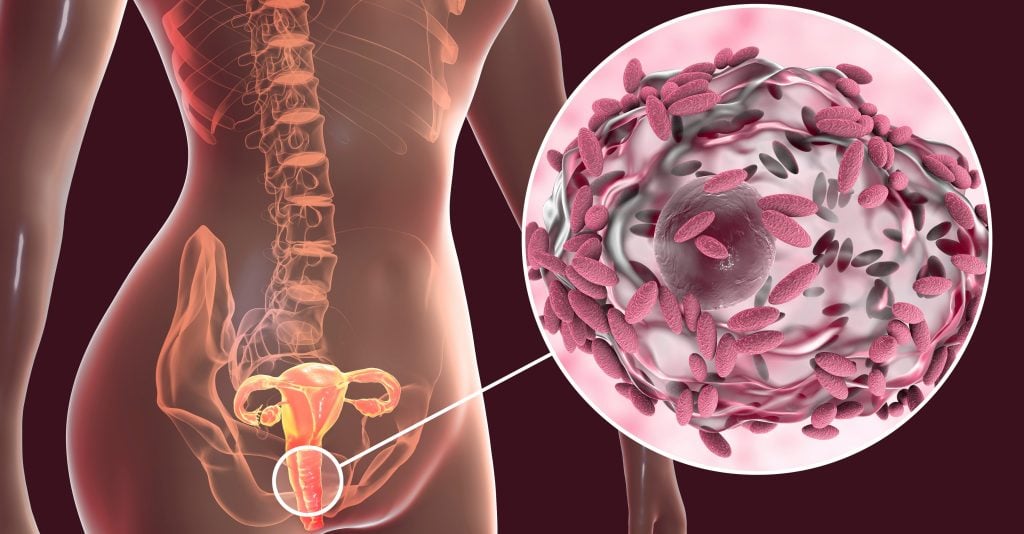





A Paradigm Shift in Urology For much of modern medicine, a foundational assumption shaped the way clinicians approached urinary tract health: healthy urine is sterile. That assumption influenced how specimens were cultured, how infections were diagnosed, and how treatment decisions were made. It also meant that any bacterium detected in urine was presumed to be either a contaminant or a pathogen- with little consideration for a middle ground. Over the past decade, advances in molecular sequencing have dismantled this paradigm. Culture-independent techniques, particularly 16S ribosomal RNA (rRNA) gene sequencing, have revealed that the human urinary tract harbors a resident […]