A Paradigm Shift in Urology
For much of modern medicine, a foundational assumption shaped the way clinicians approached urinary tract health: healthy urine is sterile. That assumption influenced how specimens were cultured, how infections were diagnosed, and how treatment decisions were made. It also meant that any bacterium detected in urine was presumed to be either a contaminant or a pathogen- with little consideration for a middle ground.
Over the past decade, advances in molecular sequencing have dismantled this paradigm. Culture-independent techniques, particularly 16S ribosomal RNA (rRNA) gene sequencing, have revealed that the human urinary tract harbors a resident microbial community, a urobiome, even in the absence of symptoms or infection (Wolfe et al., 2012; Hilt et al., 2014; Thomas-White et al., 2018). This discovery has profound implications for how clinicians understand urinary tract infections (UTIs), lower urinary tract symptoms (LUTS), recurrent infections, and a growing list of urological conditions.
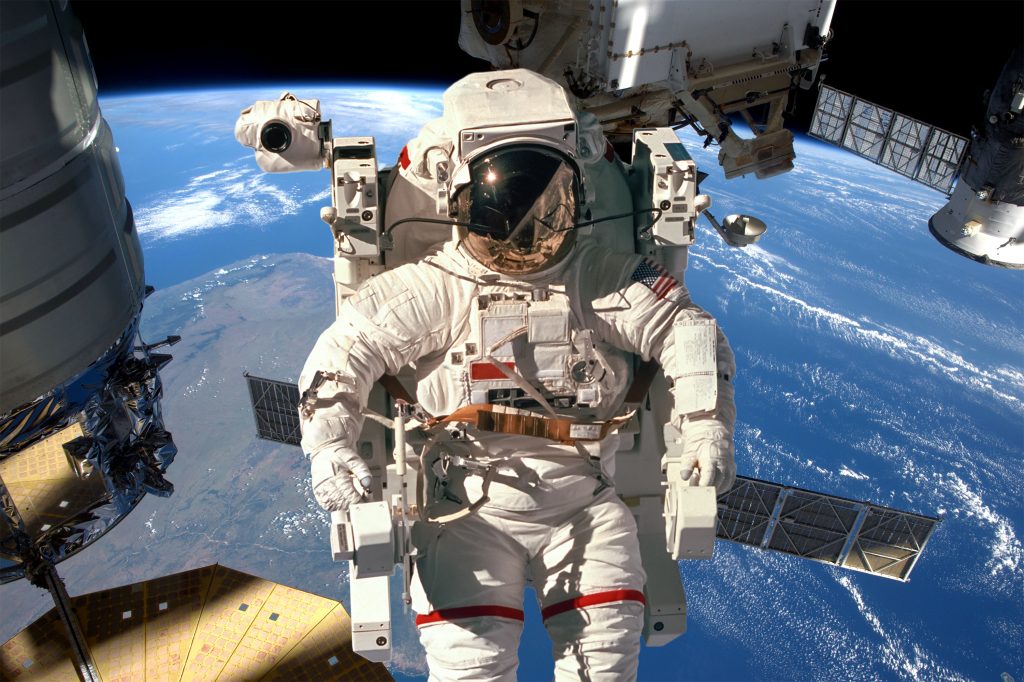
A newly published study takes this understanding into a new setting entirely: Space, or more specifically, the International Space Station (ISS).
The Study: Urinary Microbiota in Spaceflight
Published in JU Open Plus in February 2026, Chung et al. examined whether short-duration spaceflight alters the urinary microbiota of crew members aboard the International Space Station (ISS). The study was conducted as part of the RAKIA Mission- the Israeli research program associated with the Axiom Mission 1 (Ax-1), the first privately funded crewed mission to the ISS, which launched in April 2022 (Chung et al., 2026).
The research team collected urine samples from four male crew members at multiple timepoints: preflight (on Earth), on-orbit (aboard the ISS), and upon return to Earth. One crew member provided samples collected both via standard mid-stream catch and a urine collection kit (UCK) specifically designed for microgravity environments. The remaining three crew members provided mid-stream samples at preflight, return, and follow-up timepoints.
All samples were stored at -80°C and analyzed using 16S next-generation sequencing (NGS), performed by MicroGenDX (Lubbock, TX).
Key Findings
The study produced two principal findings, each with distinct clinical relevance.
First, the collection method did not significantly affect results. Bacterial load (P = .52), species richness (P = .64), and overall microbial composition (P = .26) did not differ significantly between mid-stream catch and the microgravity-adapted urine collection kit. This is a meaningful validation point- not only for space-based research logistics, but for clinical practice more broadly. The reliability of urine collection methods is foundational to confidence in molecular diagnostic results. When collection variability is minimal, clinicians can trust that sequencing outputs reflect the patient’s true microbial biology rather than methodological artifact.
Second, spaceflight significantly altered the urinary microbiota. The study detected statistically significant differences in species richness, bacterial load, and microbial composition among preflight, orbital, and return-to-Earth samples (P = .047, F = 1.8092, R² = 0.34). The microbial landscape of the urinary tract changed in response to the environmental stressors of spaceflight (microgravity, confinement, altered circadian rhythms, radiation exposure, and immune modulation) even over the course of a short-duration mission.
This finding contributes to a growing body of evidence that the urobiome is dynamic, environmentally responsive, and clinically significant.
Why the Urobiome Matters: From the ISS to the Exam Room
The clinical relevance of the urinary microbiome extends well beyond aerospace medicine. A growing body of peer-reviewed literature has connected urinary microbiome composition and disruption (dysbiosis) to a range of urological conditions.
Recurrent UTIs
Standard urine culture (SUC) has long been the primary diagnostic tool for UTIs, but its limitations are well-documented. SUC detects only a subset of cultivable organisms- typically those that grow well on standard agar under aerobic conditions within 24 to 48 hours. NGS-based detection has demonstrated substantially higher sensitivity: one comparative study found that 100% of symptomatic UTI patients tested positive for urinary bacteria via NGS, compared to only 30% via SUC (McDonald et al., 2017). For patients with recurrent UTIs and persistently negative cultures, this diagnostic gap can lead to delayed treatment, repeated empiric antibiotic courses, and clinical frustration for both provider and patient.
Research has further demonstrated that the urobiome composition in women with recurrent UTIs differs significantly from that of asymptomatic controls, with shifts in microbial diversity and specific community signatures that may serve as markers of susceptibility (Xu et al., 2022; Burnett et al., 2021). These findings suggest that understanding the microbial community as a whole, not just detecting a single pathogen, may be critical to effective management of recurrent infections.
Lower Urinary Tract Symptoms (LUTS)
Culture-independent studies have implicated urinary microbiome dysbiosis in the pathophysiology of LUTS, including urgency urinary incontinence and overactive bladder. Alterations in the relative abundance of key bacterial taxa, including reductions in protective Lactobacillus species, have been observed in patients with these conditions (Karstens et al., 2016; Pearce et al., 2014). These associations raise the possibility that microbiome-informed diagnostics could improve phenotyping and treatment selection for patients with LUTS.
Kidney Stones, Bladder Pain Syndrome, and Beyond
Emerging research has linked urinary microbiome disruption to additional conditions including urolithiasis, interstitial cystitis/bladder pain syndrome (IC/BPS), and even urologic malignancies (Aragón et al., 2018). While much of this work remains associative rather than causal, the direction is consistent: the urinary microbiome is a clinically relevant variable that standard culture-based diagnostics do not fully capture.
The ISS study by Chung et al. reinforces this broader narrative. If the urobiome can shift meaningfully in response to the environmental stressors of short-duration spaceflight, it underscores the sensitivity of urinary microbial communities to physiological change- whether that change is induced by microgravity, by antibiotic exposure, by hormonal shifts, or by surgical intervention.
The Diagnostic Gap: Culture vs. Molecular Sequencing
For clinicians, the practical question is: what does this mean for how I diagnose and treat my patients?
Standard urine culture remains valuable as a rapid, widely available tool. But its limitations are now well-characterized. SUC uses a small inoculation volume (typically 1 µL), a limited set of growth media, and aerobic incubation conditions optimized for common gram-negative pathogens like Escherichia coli. This approach systematically underdetects fastidious organisms, anaerobes, and polymicrobial infections.
Expanded quantitative urine culture (EQUC), which uses a larger urine volume (100 µL), more diverse media, and both aerobic and anaerobic conditions, has demonstrated improved detection of viable urinary bacteria (Hilt et al., 2014). However, EQUC remains labor-intensive, requires specialized laboratory capabilities, and is not widely available in routine clinical settings.
16S rRNA gene sequencing, the culture-independent approach used in the Chung et al. study, offers a different and complementary lens. By amplifying and sequencing a conserved bacterial gene region, NGS can identify the full breadth of bacterial taxa present in a sample, regardless of their cultivability. This includes organisms that are slow-growing, fastidious, anaerobic, or present in polymicrobial communities where one species may inhibit the growth of another.
For clinicians managing complex or treatment-refractory urological cases, molecular sequencing provides a more comprehensive view of the microbial landscape- enabling more targeted antimicrobial selection and supporting antimicrobial stewardship by reducing reliance on empiric broad-spectrum therapy.
The 2025 AUA/CUA/SUFU Guideline on recurrent uncomplicated UTIs acknowledged the emergence of NGS and other culture-independent approaches, while also noting that clinical outcome data are still evolving. The guideline emphasized that improved diagnostic tools must be paired with clinical judgment, detecting the presence of bacteria does not automatically equate to infection requiring treatment. Understanding the urobiome means understanding both when organisms are pathogenic and when they represent normal commensal colonization.
Spaceflight as a Stress Model
One of the most compelling aspects of the Chung et al. study is its use of spaceflight as a controlled environmental stressor. Space travel exposes crew members to a unique combination of physiological challenges: microgravity alters fluid dynamics (including how urine collects in the bladder), confinement and disrupted sleep affect immune regulation, and radiation exposure may influence microbial fitness and host-microbe interactions.
Previous research on astronaut microbiomes has documented changes in gut, skin, nasal, and oral microbial communities during ISS missions (Voorhies et al., 2019). The Chung et al. study extends this line of investigation to the urinary tract, a relatively understudied niche in spaceflight research, and demonstrates that even short-duration exposure to the space environment is sufficient to produce measurable urobiome shifts.
For Earth-based clinicians, the spaceflight model serves as a compelling demonstration of principle: environmental and physiological stressors alter the urobiome, and those alterations may have clinical consequences. Whether the stressor is microgravity or menopause, antibiotic exposure or surgical catheterization, the underlying message is the same- the urinary microbiome responds to its environment, and capturing that response requires diagnostic tools with sufficient resolution.
Clinical Takeaways
The urinary tract is not sterile. Molecular sequencing has established that the bladder and urinary tract harbor a resident microbial community in healthy individuals. Clinicians should interpret negative cultures in the context of this understanding, “no growth” does not necessarily mean “no organisms.”
The urobiome is dynamic. Environmental stressors, from spaceflight to hormonal changes to antibiotic exposure, can shift the composition of the urinary microbiome. Longitudinal changes in the urobiome may be clinically informative.
Molecular diagnostics complement traditional culture. 16S NGS and other culture-independent methods can identify organisms missed by standard culture, supporting more targeted treatment and better antimicrobial stewardship. They are particularly valuable in complex, recurrent, or treatment-refractory cases.
Collection method reliability supports clinical confidence. The finding that different urine collection methods did not significantly alter molecular results provides additional validation for the clinical use of NGS-based urinary diagnostics.
More research is needed, and it is underway. As the authors note, larger cohorts and controlled study designs, including Earth-based controls, will be necessary to fully characterize how spaceflight and other stressors affect the urobiome. But the direction of the evidence is clear, and the diagnostic tools to capture that complexity are already available.
Conclusion
The Chung et al. study is a compelling example of how frontier research environments can illuminate fundamental questions in clinical medicine. By demonstrating that the urinary microbiome shifts during short-duration spaceflight, the study reinforces what urobiome researchers have been building toward for over a decade: the urinary tract is a dynamic microbial ecosystem, and understanding it requires diagnostic approaches that match its complexity.
For clinicians managing urological conditions on Earth, the practical implications are immediate. Culture-independent molecular diagnostics, including 16S NGS, provide a more complete picture of the microbial landscape, enabling targeted treatment, supporting antimicrobial stewardship, and advancing personalized approaches to urological care.
The urobiome frontier is expanding, from the clinic to the laboratory to the International Space Station. The tools to explore it are here.
References
Aragón IM, Herrera-Imbroda B, Queipo-Ortuño MI, et al. The urinary tract microbiome in health and disease. Eur Urol Focus. 2018;4(1):128-138. doi:10.1016/j.euf.2016.11.001
Burnett LA, Hochstedler BR, Engel K, et al. Recurrent urinary tract infection: association of clinical profiles with urobiome composition in women. Neurourol Urodyn. 2021;40(6):1479-1489. doi:10.1002/nau.24698
Chung PH, Boursi B, Baris HE, et al. Variations in urinary microbiota on a short-duration space mission to the International Space Station. JU Open Plus. 2026;4(2):e00017.
Hilt EE, McKinley K, Pearce MM, et al. Urine is not sterile: use of enhanced urine culture techniques to detect resident bacterial flora in the adult female bladder. J Clin Microbiol. 2014;52(3):871-876. doi:10.1128/JCM.02876-13
Karstens L, Asquith M, Davin S, et al. Does the urinary microbiome play a role in urgency urinary incontinence and its severity? Front Cell Infect Microbiol. 2016;6:78. doi:10.3389/fcimb.2016.00078
McDonald M, Kameh D, Johnson ME, Johansen TEB, Albala D, Mouraviev V. A head-to-head comparative phase II study of standard urine culture and sensitivity versus DNA next-generation sequencing testing for urinary tract infections. Rev Urol. 2017;19(4):213-220. doi:10.3909/riu0780
Pearce MM, Hilt EE, Rosenfeld AB, et al. The female urinary microbiome: a comparison of women with and without urgency urinary incontinence. mBio. 2014;5(4):e01283-14. doi:10.1128/mBio.01283-14
Thomas-White KJ, Kliethermes S, Rickey L, et al. Evaluation of the urinary microbiota of women with uncomplicated stress urinary incontinence. Am J Obstet Gynecol. 2017;216(1):55.e1-55.e16. doi:10.1016/j.ajog.2016.07.049
Voorhies AA, Mark Ott C, Mehta S, et al. Study of the impact of long-duration space missions at the International Space Station on the astronaut microbiome. Sci Rep. 2019;9:9911. doi:10.1038/s41598-019-46303-8
Wolfe AJ, Toh E, Shibata N, et al. Evidence of uncultivated bacteria in the adult female bladder. J Clin Microbiol. 2012;50(4):1376-1383. doi:10.1128/JCM.05852-11